In May, the procedure began in the Parliament of Catalonia to provide a legal framework for the work of social entities and in October the debate was passed to the totality.
In May, the procedure began in the Parliament of Catalonia to provide a legal framework for the work of social entities and in October the debate was passed to the totality.
Despite having a Until now, the social sector has not had a own legal framework in Catalonia. To change this situation, the Table of Third Sector entities and the The Business Confederation of the Third Social Sector – as representatives – have promoted a law that values the work of social entities, as well as their participation in the design, execution and monitoring of public policies: “This is an essential law for the people and for the country. The Third Social Sector Law is necessary, timely, urgent and viable”, in the words of Francina Alsina, president of the Bureau.
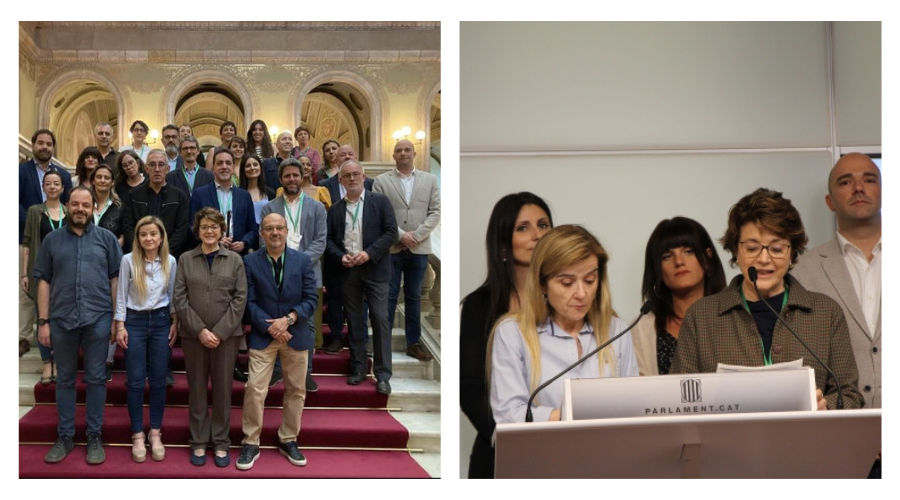
To this end, in May the law went through Parliament with the support of all political parties (except Vox). In October, the law took another step forward after passing the debate in its entirety, without any political group presenting amendments to the totality, so the text must continue with the parliamentary procedures in paper and committee.
What does the law say?
The bill consists of 19 articles (divided into 4 chapters), an additional provision, a repeal provision, and six final provisions.
The first chapter refers to the Definition of entities from the third sector, to the guiding principles and their scope of application. The proposal specifies, in the second chapter, issues related to collaboration between the Third Social Sector and the public and private sectors, such as Non-contractual instruments. “We believe that the collaboration between social entities and Administrations it is basic and must be established from co-responsibility”, commented the president of the Bureau.
The third chapter puts on the table the need for the Third Sector to become a recognized interlocutor, not only implicitly, but also with guarantees of law, with institutional support and with a Adequate fundingto be able to carry out their work. Thus, greater investment and budgetary reinforcement from public administrations, in the words of Alsina, would guarantee the sustainability of the programmes. Finally, the Promotion measuresof the sector, which include the regulation of the ‘Plan for the promotion and promotion of the Third Sector’.
From Fundesplai we trust that the Third Sector Law can be approved and that the necessary mechanisms are articulated to deploy and make it effective.