Different educational agents talk about the current state of education in leisure time at the Fundesplai symposium.
On February 2, took place the symposium: “Where is education going in leisure time?” at the Llars Mundet site of the University of Barcelona. This event was part of the National Congress of Comparative Education, organized by the Autonomous University of Barcelona and the University of Barcelona and which this year celebrated its seventeenth edition.
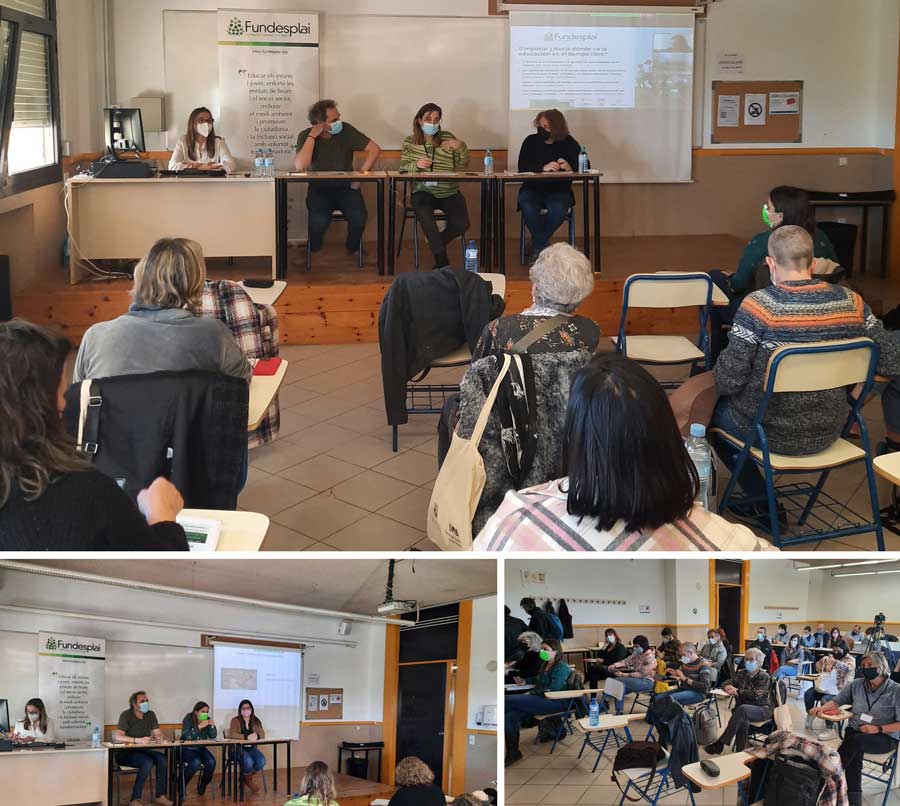
During the day, different actors and educational agents reclaimed the identity of the sector and pointed out its contribution to the transformative development of the local communities where they are present. Carles Xifra Cirach, Director of Innovation and Content of Fundesplai, was in charge of conducting the event and stressed in the presentation the importance of guaranteeing universal access to educational leisure.
In her first speech, Maria Jesús Larios Paterna, Deputy Ombudsman of Catalonia, stressed that the Convention on the Rights of the Child includes the right to leisure. He also pointed out the need for structural reforms to guarantee this right.
On behalf of Fundesplai and the International University of Catalonia, the speakers Glòria Pedró Villarino and Mariona Graell Martín stressed that esplais are schools of citizenship and participation of children and youth. In addition, they stressed that recreation centers develop a large number of links with the community and that they have a high social impact.
In the presentation “Challenges and opportunities to advance towards a diverse educational ecosystem”, Pilar Gargallo, from the Federation of Movements for Pedagogical Renewal of Catalonia (FMRPC), assured that education is not only in school, but that it is a full-time challenge. He also gave different examples of projects that combat educational inequalities in leisure time.
The last intervention was by Laura Granado, from Fundación Esplai, in which she presented “Forum Committed Youth. A networked socio-educational experience that fosters social action and commitment”. The report was given by Pepi Soto Marata, from the Autonomous University of Barcelona.