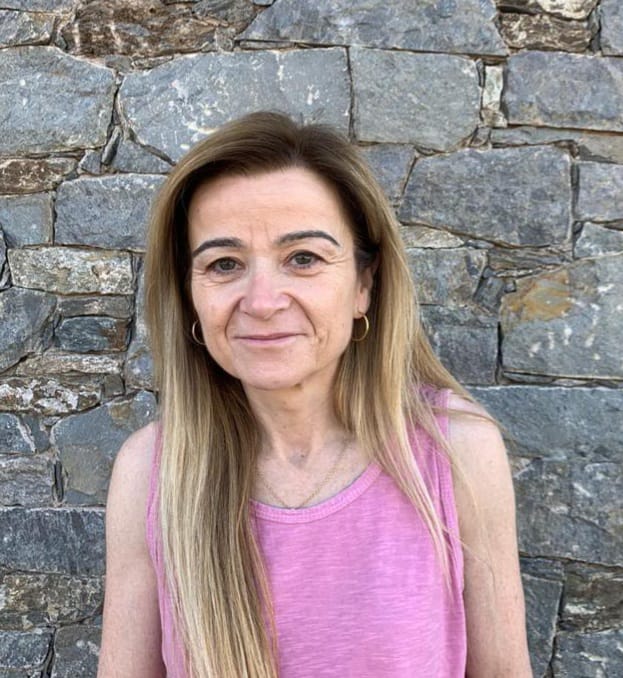
In issue 86 of the Diari de Fundesplai we interviewed Helena Fontanet, president of La Confederació and representative of the Red Cross Catalonia on the Board of Directors.
In issue 86 of the Diari de Fundesplai we interviewed Helena Fontanet, president of La Confederació and representative of the Red Cross Catalonia on the Board of Directors.
1. How do you see the current situation of the social sector, especially considering the underfunding suffered by many entities?
The Third Social Sector has been demanding fair funding for the services, projects and social activities it carries out and that are essential for the most vulnerable people in the country for too long. This chronic underfunding weakens us as a sector and, above all, weakens care services that are fundamentally publicly responsible.
Entities are already tired of having to permanently claim what we believe should be a priority for the country. The Third Social Sector has proven to be the necessary and strategic ally of the administrations for the guarantee of social rights. We work from the non-profit and with a vocation for public service. It is necessary to take a step forward as a country to increase investment in social protection policies that ensure the quality of care, the sustainability of services and the improvement of the working conditions of our professionals.
2. What does it mean for the Confederation and for the entire non-profit sphere to have the Third Social Sector Law?
The Third Social Sector Law is, without a doubt, an opportunity to highlight the role and contribution to society of the thousands of social entities in Catalonia. Certainly, we are an asset of the country that must be strengthened, recognized and made visible, both for its social function, and for the generation of economic activity and employment that it represents. We are more than 3,000 non-profit organizations and more than 100 thousand workers!
As they already have in other territories, this Law must contribute to the recognition of the identity of the Catalan third social sector, based on shared principles and values and from areas and activities that are its own. We need our own regulatory framework with the force of law. Among other issues, this law must serve to provide the sector with greater legal certainty, to guarantee and improve the participation of social entities in the design, execution and monitoring of public policies, and also to ensure measures to promote and improve financing for the Third Social Sector.
3. On the other hand, the Law on Social Agreement on Care Services for People is also on the table, how will this law help the Third Sector?
These are two different regulatory frameworks that must necessarily be coherent and coordinated. The law of concerted action must regulate an instrument that the administration has to make effective the provision of public services of attention to people of a social nature. An instrument that we value very positively because it finally excludes this type of services that are so sensitive from the dynamics of public procurement and subsidy, which do not meet the needs of either services or people. And we obviously defend that this instrument must guarantee not only the highest quality in the attention to groups, but must also ensure the non-profit in the management of public resources.
And this is where having a Third Social Sector law can help us frame these shared goals. We need these regulatory frameworks to walk in parallel and come to fruition. The sector is very clear about this. Now it’s a matter of political will.
4. If these two laws are approved, how do they fit in with the new law on the Social and Solidarity Economy?
We are the Third Social Sector and we are Social Economy. The Social and Solidarity Economy Law is a broader law that not only affects the Third Social Sector, as part of the Social and Solidarity Economy, but also includes cooperatives, mutual societies or solidarity economy initiatives, among others.
This broader framework should also help us to reinforce the socioeconomic dimension of the social sector, it must be able to value a certain way of doing things and, obviously, it must be complementary to the other two laws.
5. The Confederation brings together a large number of entities, how important is networking in our sector?
Networking and intercooperation is vital, and our raison d’être. On our own, we are not going anywhere, or we will never go as far as if we do it together, in a coordinated and collaborative way. We bring together very diverse and plural entities: different legal forms, different areas of action, different territories, etc. But if we have learned one thing from these 25 years of experience, it is that it is essential that the sector is articulated.
It is important because it allows us to be stronger before the administration or other political, economic and social agents. It is important because it facilitates spaces for the exchange of knowledge and good practices; And it is important because it helps us build discourse and collective positioning as a sector.
6. What are the closest challenges facing The Confederation? And on a more personal level, Helena, how do you approach this new period in the presidency?
The priority challenges facing the Confederation right now can be summarised in two main areas: the deployment of the triple legislative framework (Law on the Third Social Sector, Law on Concerted Action and Law on Social and Solidarity Economy) and improving funding for social services and care for people.
From this more personal point of view, I approach this new position at the head of The Confederation with responsibility and commitment. In any case, it is important to emphasize that it is a transitory mandate, until the next elections, and absolutely one of continuity, with the support and together with my colleagues on the Board of Directors of La Confederation, of which I have been a member since 2018.